newtopy
Introduction to Newtopy
Welcome to the world of Newtopy, where dreams, ideas, and practical solutions converge to shape a better collective future. In a rapidly evolving global landscape filled with unprecedented challenges and opportunities, Newtopy emerges as a beacon of hope, creativity, and forward-thinking. This innovative concept redefines traditional notions of utopia, inviting us to rethink rigid frameworks and embrace collaboration, inclusivity, and adaptable strategies that align with the needs of modern society. Dive into this exploration to understand how Newtopy is influencing thought, innovation, and action across various spheres of life today.
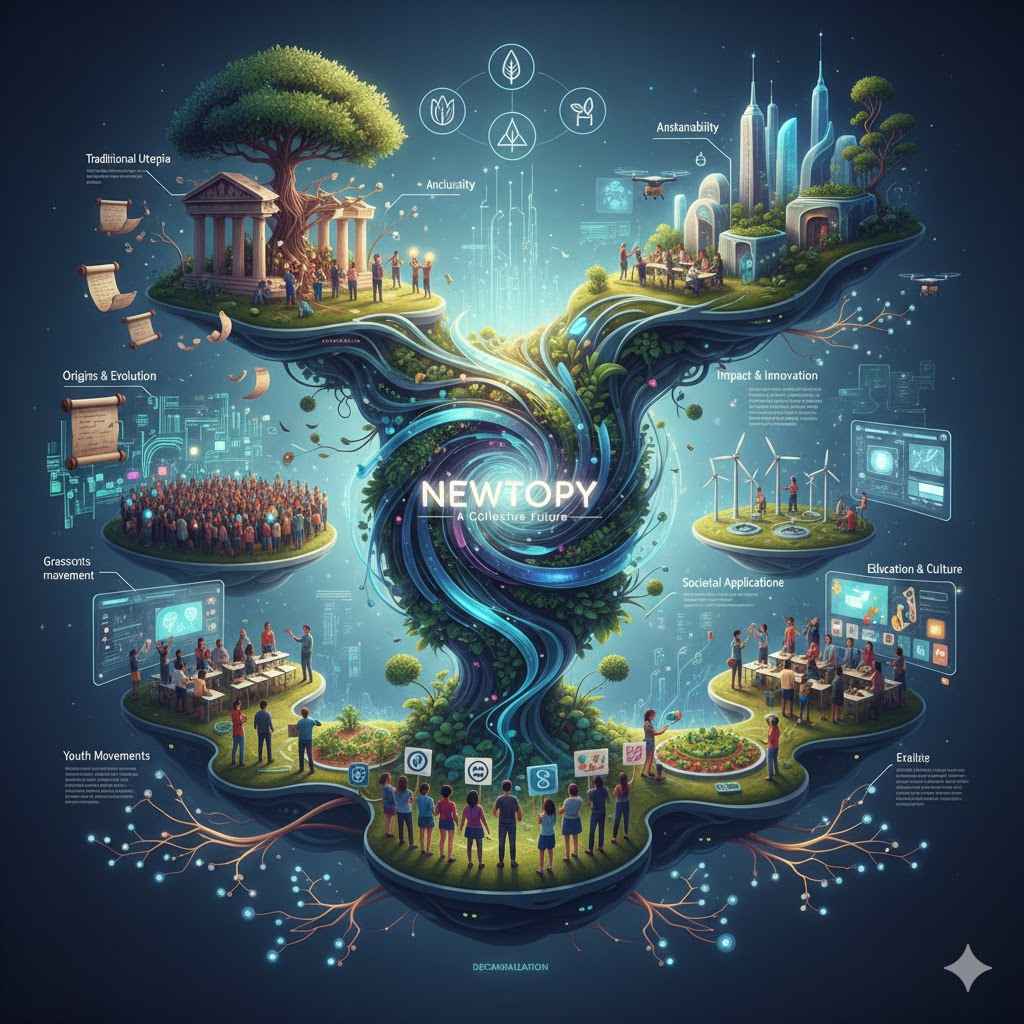
Origins and Evolution of Newtopy
The concept of Newtopy originated as a response to the limitations of classical utopian ideals, reflecting contemporary societal challenges while integrating innovative, realistic solutions. The term itself is a blend of “new” and “utopia,” symbolizing a renewed, grounded vision that prioritizes evolution over static perfection.
Initially sparked by philosophical debates, Newtopy gained momentum through grassroots movements and rapid technological advancements. Influencers across fields— from thinkers to activists—began advocating for collaborative approaches centered on sustainability and ethical progress. This evolution underscores Newtopy’s fluid nature: it continuously adapts as societal values shift and technology reshapes human interactions, ensuring it remains relevant and actionable.
How Newtopy Differs from Traditional Utopias
Newtopy stands in stark contrast to traditional utopias, which often depict rigid, idealized societies striving for a singular vision of perfection. These classic models emphasize uniformity, conformity, and an unattainable flawless state, sometimes appearing oppressive or disconnected from reality.
In opposition, Newtopy celebrates diversity, adaptability, and multiple pathways to progress. It rejects the pursuit of absolute perfection in favor of continuous improvement, experimentation, and collaboration among diverse communities. This flexibility empowers individuals to shape their own paths within a supportive collective framework, fostering genuine innovation and resilience.
Impact on Modern Thought and Innovation
Newtopy is profoundly reshaping contemporary thinking by promoting open-mindedness, cooperation, and creative problem-solving. It challenges conventional boundaries, inspiring professionals in various fields to develop novel solutions for complex global issues.
As it embeds itself in modern discourse, Newtopy drives a surge in innovation. Entrepreneurs, creators, and policymakers are adopting its principles, leading to breakthroughs in technology, social structures, and beyond. The shift from competition to collaboration allows diverse voices to contribute uniquely, potentially transforming our future landscape through shared strengths and ethical advancement.
Highlights of Newtopy’s Significance
To summarize the core essence of Newtopy:
- Origins: A modern, adaptable twist on utopia, born from philosophical roots and grown through grassroots and tech-driven movements.
- Key Differences: Emphasizes diversity, continuous evolution, and practicality over rigid perfection and uniformity.
- Innovation Driver: Fosters collaborative mindsets, sparking creativity in technology and society.
- Societal Applications: Supports community initiatives focused on sustainability and belonging.
- Technology and Economy: Promotes decentralized, open-source solutions and people-centered economic models like cooperatives.
- Education and Culture: Shifts toward collaborative learning, critical thinking, inclusivity, and diverse storytelling.
- Governance: Advocates transparent, decentralized decision-making for greater accountability.
- Youth Embodiment: Powers global movements for climate action, social justice, and equitable change.
- Current Relevance: Addresses challenges like inequality, climate change, and technological disruption.
- Criticisms: Risks of over-idealism, potential elitism, or societal fragmentation.
- Core Principle: Decentralization for empowerment, resilience, and organic solutions.
- Future Outlook: Promises inclusive, agile systems in governance, economy, and daily life over the next decade.
Applications in Society, Technology, and Economy
Newtopy manifests practically across multiple domains. In society, it inspires community-driven projects that prioritize collaboration, local needs, and long-term sustainability, building stronger senses of belonging.
In technology, it champions decentralized and open-source innovations, with startups creating user-centric products shaped by community feedback. Economically, Newtopy encourages models that value human well-being over pure profit, such as social enterprises, cooperatives, and impact-driven systems.
Influence on Education, Culture, and Governance
Education under Newtopy moves away from rote learning toward interdisciplinary, real-world problem-solving and collaborative creativity, preparing learners to tackle actual challenges innovatively.
Culturally, it amplifies inclusivity by providing platforms for marginalized voices, with art and media reflecting themes of unity and diverse futures. In governance, Newtopy pushes for decentralized, transparent systems that empower citizens through direct participation and accountability.
Embodying Newtopy in Youth Movements
Young people worldwide are vividly bringing Newtopy to life, envisioning societies rooted in collaboration, sustainability, and equity. Through grassroots activism from climate strikes to digital advocacy they leverage technology to amplify voices, connect globally, and challenge outdated norms, fueling progress toward healthier, more balanced communities.
Relevance of Newtopy in Today’s World
Newtopy’s relevance has never been greater amid fast-paced global shifts, including climate crises, inequalities, and technological disruptions. It offers a practical perspective emphasizing adaptability and collective intelligence over outdated rigid structures. Businesses, communities, and individuals are increasingly adopting sustainable, well-being-focused approaches, reflecting a broader desire for meaningful improvement.
Criticisms of Newtopy
Despite its promise, Newtopy faces valid critiques. Some argue it can be overly idealistic, overlooking human complexities like conflict or resource limits, potentially leading to unrealistic expectations. Others worry it might enable elitism, where those with greater access to resources dominate discussions, inadvertently sidelining underrepresented groups and perpetuating inequalities.
Decentralization: The Cornerstone of Newtopy
Decentralization lies at the heart of Newtopy thinking, redistributing power from central authorities to individuals and local communities. This structure promotes autonomy, diverse ideas, and resilience, allowing solutions to emerge organically. As technology advances, decentralized models like community networks and shared platformsvbecome increasingly viable and essential.
Envisioning the Next Decade of Newtopy
Looking ahead, Newtopy is likely to mature into an even more inclusive paradigm, fostering sustainable living, ethical technology, and interconnected communities. Decentralized governance and economies could enable agile responses to challenges, removing barriers to individual contributions. This era may birth new forms of art, education, leadership, and shared responsibility, redefining human interactions with resources and each other.
Conclusion: Insights into the Future with Newtopy
Newtopy provides a fresh, actionable lens for viewing and building our future. By challenging traditional utopian rigidity, it encourages ethical innovation, adaptability, and broad participation across sectors. As youth movements and global shifts embody its ideas, Newtopy’s principles especially decentralization and collaboration hold the potential to transform education, culture, governance, and beyond.
In an era of technological and ideological transformation, Newtopy isn’t a distant fantasy but a call to conscious creation. It reminds us that progress stems from intentional, collective action: not perfection, but ongoing, inclusive evolution toward equitable, resilient tomorrows.
About the Author