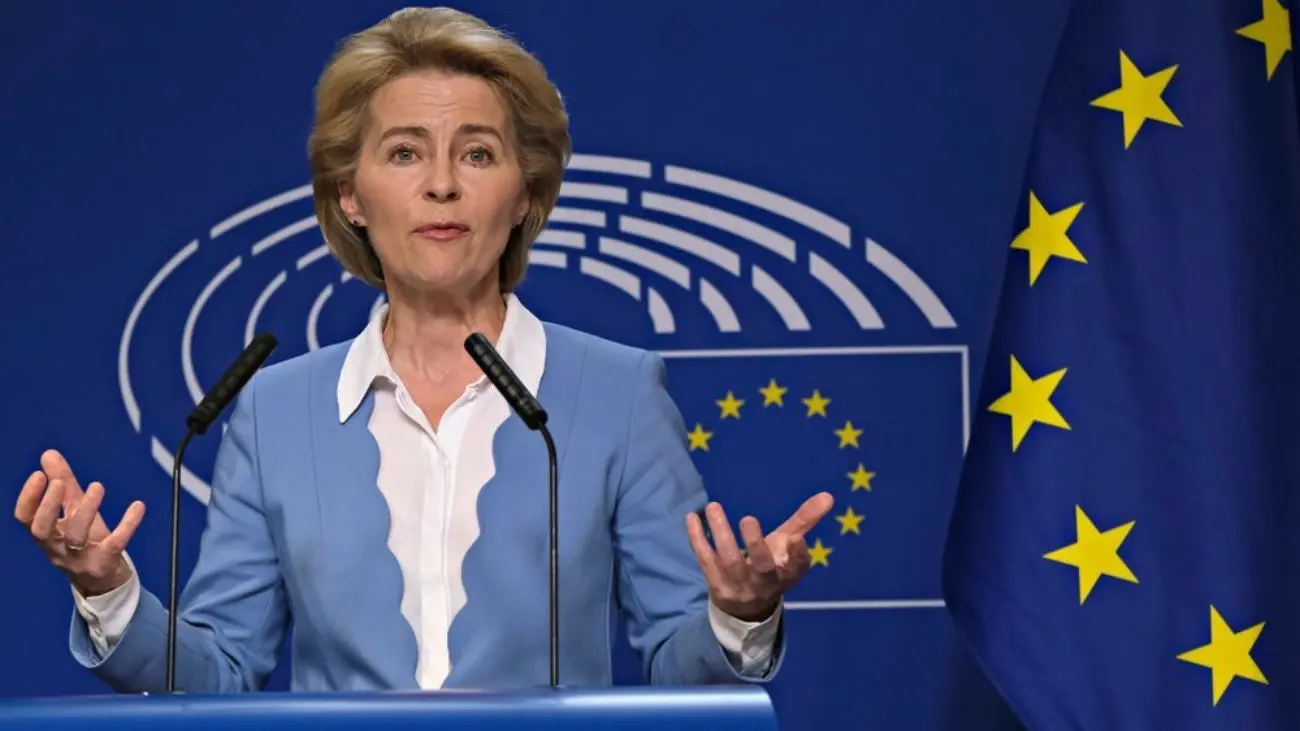
EU chief von der Leyen faces no confidence vote
A Critical Moment for Von der Leyen’s European Commission Presidency
On Thursday in Strasbourg, the European Parliament will hold a no-confidence vote targeting European Commission President Ursula von der Leyen, a move that has stirred political unrest and exposed growing fissures in the EU’s power structure. While the motion is highly unlikely to pass, its symbolism resonates far beyond its expected outcome.
This challenge — spearheaded by Romanian far-right lawmaker Gheorghe Piperea — accuses von der Leyen of opaque leadership, most notably surrounding her controversial text exchanges with Pfizer CEO Albert Bourla during the EU’s COVID-19 vaccine negotiations. The Commission’s repeated failure to disclose these communications has fueled allegations of secrecy and centralized governance, undermining trust even within her own centrist coalition.
A Vote Doomed to Fail, but Politically Damaging
The no-confidence vote, set for around midday (1000 GMT), is one of the rare instances when a sitting Commission President faces such a challenge. Though it is backed by only a minority of lawmakers, including factions on the far-right and some on the radical left, the motion’s failure is not the story. What matters is what the vote reveals: waning patience with von der Leyen’s leadership style and a fractured pro-EU majority.
Von der Leyen currently enjoys support from the two dominant political forces in the European Parliament: the center-right European People’s Party (EPP) and the center-left Socialists and Democrats (S&D). Both groups have categorically rejected the motion. The vote needs two-thirds of votes cast, along with a majority of all MEPs — a bar unlikely to be met.
Pfizergate: The Shadow of Vaccine Diplomacy
At the center of the scandal lies what critics have dubbed “Pfizergate.” Piperea and other opponents accuse von der Leyen of undermining transparency by not releasing text messages exchanged with Bourla during critical negotiations for COVID-19 vaccine procurement.
Multiple court cases are underway to force disclosure, and watchdog groups argue that von der Leyen has shielded herself from scrutiny, thereby undermining institutional accountability. The Commission’s refusal to fully cooperate with investigations has given ammunition to both EU skeptics and traditional allies concerned with governance standards.
This controversy has become a rallying point for opposition voices, blending legitimate institutional concerns with broader anti-EU sentiment, especially among far-right factions who have long campaigned against centralized European power.
Leadership Accused of Centralization and Political Drift
Criticism of von der Leyen’s leadership has also emerged from within her traditional support base. Centrist leader Valérie Hayer warned that the Commission has become “too centralized and sclerotic” under von der Leyen, suggesting that her leadership style could erode democratic norms within the EU institutions.
Of particular concern is the Commission’s political maneuvering with far-right parties to water down environmental legislation, which has angered both green and centrist MEPs. By aligning with nationalist governments like Hungary’s Viktor Orbán, von der Leyen risks alienating the very coalition that secured her position.
Orbán, never one to shy away from controversy, tweeted “Time to go” alongside an image of the EU chief, signaling his support for Piperea’s motion — and highlighting broader dissatisfaction from Eastern European leaders skeptical of Brussels’ influence.
Romanian Political Tensions Spill Over Into the EU Arena
Piperea’s motivations go beyond “Pfizergate.” He accuses the European Commission of interfering in Romania’s recent presidential election, which saw pro-European candidate Nicușor Dan narrowly defeat nationalist rival George Simion. The original election was annulled by Romania’s constitutional court over allegations of Russian disinformation campaigns and manipulation of social media.
Piperea claims that EU influence tipped the scale unfairly in favor of Dan, citing this as another example of von der Leyen’s heavy-handed involvement in national affairs. Though the accusation lacks concrete proof, it underscores rising resentment among nationalist voices who view Brussels’ involvement in member-state politics as overreach.
Internal Division Within the Far Right
Even within the European Conservatives and Reformists (ECR) group, which includes Piperea, there is no consensus. The Italian Brothers of Italy party, led by Prime Minister Giorgia Meloni, announced they would not support the motion, citing the need for stability and continuity.
This internal discord limits the motion’s chances of success and reflects the fragmentation among Eurosceptic factions, many of whom remain ideologically opposed but tactically divided.
Von der Leyen’s Response: Unity Over Division
In her speech to Parliament earlier this week, von der Leyen dismissed the no-confidence motion as an orchestrated attempt to divide Europe. She labeled its backers “anti-vaxxers” and “Putin apologists,” clearly aiming to delegitimize the opposition by tying them to conspiracy theories and geopolitical adversaries.
She called on lawmakers to renew confidence in her leadership, citing the need for a unified Europe in the face of major challenges: from the Russia-Ukraine war, to transatlantic trade disputes, to the climate crisis and digital transformation.
Von der Leyen’s messaging leaned heavily into geopolitical strategy, portraying her Commission as a bulwark of European stability, indispensable in uncertain times. But critics argue that this appeal to unity cannot substitute for internal democratic accountability.
Conclusion: The Bigger Picture Behind a Doomed Vote
Though von der Leyen is widely expected to survive this no-confidence challenge, the event serves as a powerful reminder of growing disillusionment within the European project. From transparency concerns to strategic political alliances, her leadership is now being questioned not just by predictable opponents but also by long-standing allies.
The fractures exposed by this vote could carry forward into next year’s elections and redefine the EU’s political landscape, especially as populist and nationalist parties gain traction across the continent.
In the short term, von der Leyen may emerge politically intact. But the erosion of trust, even among those who will vote to keep her in office, may cast a long shadow over the remainder of her term and any future ambitions she may harbor — perhaps even a bid for reappointment or higher international roles.
About the Author