video&a
Video analytics fundamentally shifts the paradigm from traditional monitoring, where human operators sift through hours of recordings, to automated systems that detect, classify, and respond to events autonomously. At its core, the technology processes video streams using sophisticated algorithms to generate metadata, such as identifying objects, tracking movements, or flagging anomalies. This capability addresses a key pain point in conventional surveillance: the overwhelming volume of data that leads to missed incidents and delayed responses. By integrating computer vision techniques like object detection and facial recognition, video analytics empowers users to proactive rather than reactive strategies, ensuring that critical events are addressed swiftly.
Key Mechanisms and Technologies Driving Video Analytics
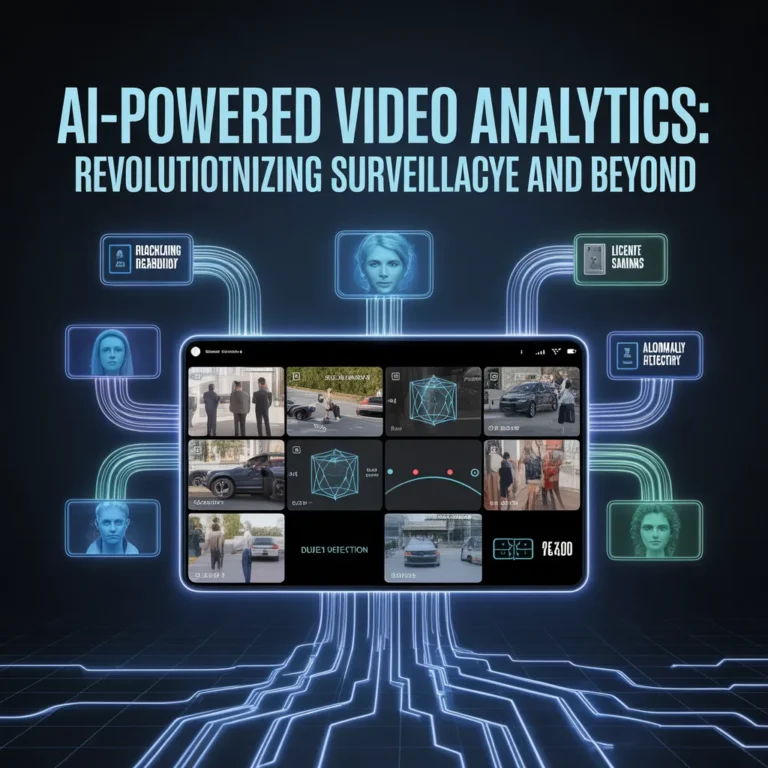
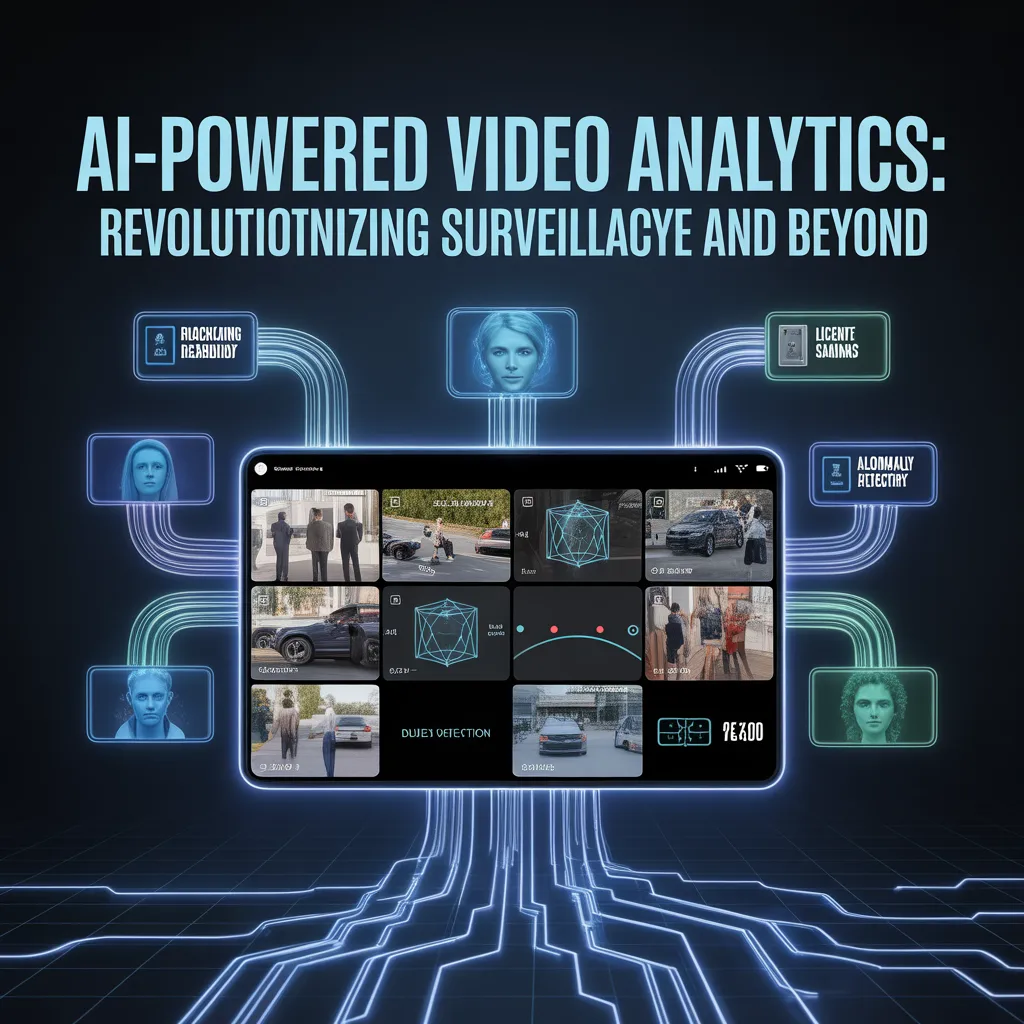
Understanding how video analytics operates reveals its technical sophistication. The workflow typically begins with data ingestion from live or stored feeds, followed by pre-processing to enhance image quality. Advanced analysis then employs machine learning models to interpret the content, culminating in outputs like alerts or summaries.
Object Detection and Tracking: Utilizes models such as YOLO or SSD to locate and follow entities like vehicles or people, enabling precise monitoring in dynamic environments.
Behavior Analysis and Anomaly Detection: Identifies unusual patterns, such as loitering or unattended items, which are crucial for preempting security threats.
Specialized Features: Includes facial recognition for identity verification, Automatic License Plate Recognition (ALPR) for traffic management, and Optical Character Recognition (OCR) for extracting text from visuals.
These technologies distinguish AI-based systems from traditional rule-based ones, which often suffer from high false alarm rates (95-98%). In contrast, deep learning allows AI variants to achieve over 95% accuracy by learning from historical data.
Diverse Applications Across Industries
The versatility of video analytics extends far beyond its roots in security, infiltrating industries where visual data holds untapped potential. In security and surveillance, it excels at intrusion detection, perimeter security, and real-time threat identification, as demonstrated during the Paris Olympics where 485 AI-equipped cameras bolstered public safety. Retail leverages it for people counting, heatmapping, queue management, and loss prevention, providing insights into customer behavior to optimize store layouts and reduce shrinkage.
In smart cities and traffic management, video analytics facilitates vehicle classification, parking occupancy monitoring, and early jam detection, contributing to smoother urban flows. Emerging applications include military drone reconnaissance—evident in Ukraine’s use of war footage to train AI models and healthcare for patient monitoring. Industrial sectors benefit from automation in production lines and safety compliance on construction sites.
Benefits and Implementation Strategies
The adoption of video analytics yields multifaceted benefits that justify its investment.
Efficiency Gains: Automates routine tasks, reducing manual review and allowing personnel to focus on high-priority issues.
Cost Reductions: Minimizes losses from theft, fraud, or inefficiencies, while scalable platforms integrate with existing IoT and Video Management Systems (VMS).
Enhanced Insights: Supports predictive analytics for better decision-making, with continuous improvements through machine learning.
Implementing video analytics requires careful planning. Organizations should weigh edge versus cloud processing for latency and privacy needs, ensure cybersecurity with encryption, and prioritize user-friendly interfaces to minimize training. Common pitfalls include underestimating data volumes or neglecting ethical considerations like privacy and algorithmic bias, which can be mitigated through compliance with regulations such as GDPR and CCPA.
Future Trends and Ethical Imperatives
Looking ahead, video analytics is poised for further innovation with generative AI enhancements for streamlined searches, increased edge computing for faster processing, and deeper IoT integrations. Predictive capabilities will evolve from reactive alerts to forecasting incidents, while hyper-personalization could tailor experiences in retail.
However, ethical challenges must be addressed. Privacy concerns demand robust data anonymization and consent protocols, while transparency in AI decisions—through explainable AI (XAI)—builds trust. Mitigating biases via diverse training data is essential to ensure fair outcomes.
In conclusion,
Video analytics represents a pivotal advancement in harnessing visual data for strategic advantage. By blending paragraphs of in-depth explanation with pointed breakdowns, this exploration underscores its potential to redefine industries. As adoption grows, organizations that implement it responsibly will not only enhance security but also unlock new avenues for innovation and efficiency.
About the Author